

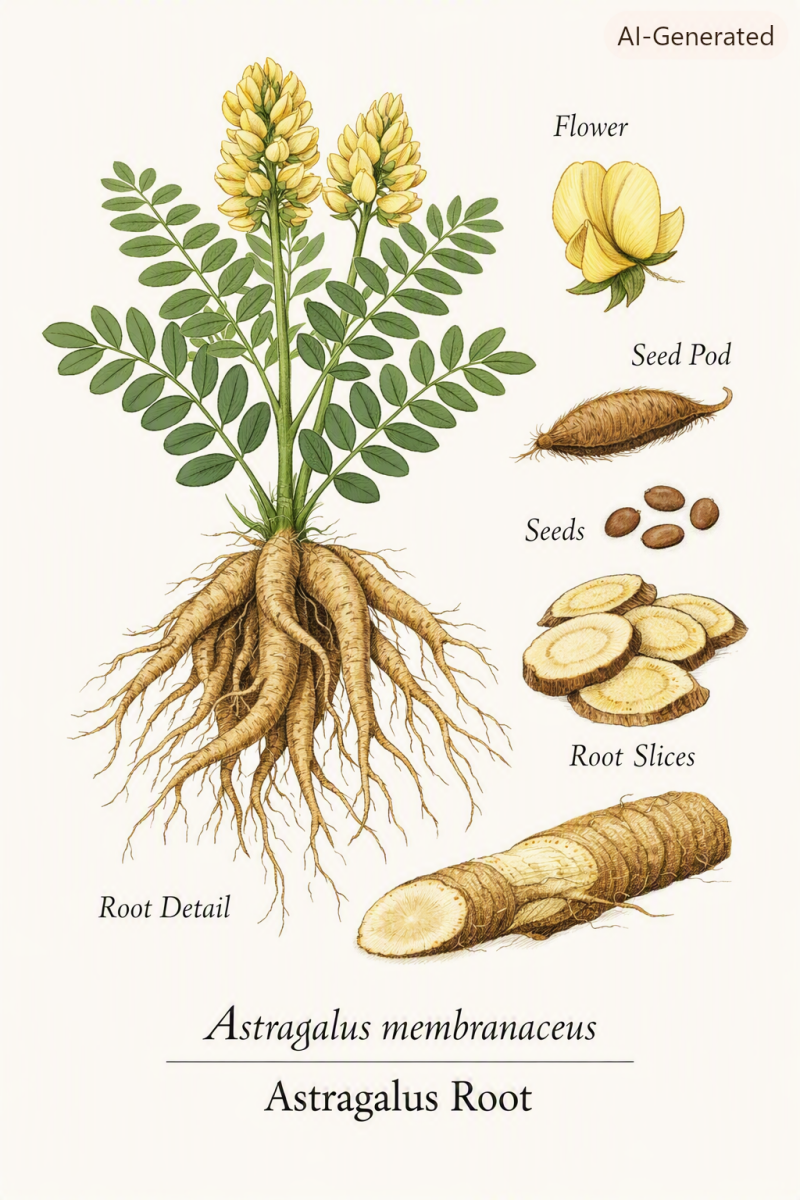
Astragalus: A Foundational Herb for Immune Resilience
By Pino Campana, N.D.
Astragalus membranaceus has long been recognised as one of the most important tonic herbs in traditional Chinese medicine, valued for its ability to strengthen defensive qi, support vitality, and enhance long‑term immune robustness. Modern herbal medicine continues to validate these traditional uses, positioning Astragalus as a key botanical for individuals seeking sustained immune resilience rather than short‑term symptom relief.
From a physiological perspective, Astragalus acts across multiple layers of the immune system. It enhances the function of macrophages, natural killer cells, and other components of innate immunity, improving the body’s ability to respond to early pathogenic challenges. At the same time, Astragalus supports adaptive immune processes, helping regulate antibody production and maintain balanced immune signalling.
One of its most significant actions lies in its ability to strengthen the body’s overall vitality. Astragalus supports healthy energy production, assists in recovery from fatigue, and promotes resilience during periods of stress — all of which directly influence immune performance. Its polysaccharides, saponins, and flavonoids contribute to improved cellular function, antioxidant protection, and modulation of inflammatory pathways.
Astragalus is also deeply supportive of the lymphatic system, encouraging efficient fluid movement and immune surveillance. This makes it particularly valuable for individuals experiencing sluggish immunity, recurrent infections, or general depletion.
Clinically, Astragalus is best used as a long‑term tonic rather than an acute remedy. It shines in preventative care, seasonal immune strengthening, and constitutional support for those with low vitality. When integrated into a broader herbal and lifestyle protocol, Astragalus becomes a cornerstone herb for building true, sustainable immune resilience.
For practitioners and health‑conscious individuals alike, Astragalus offers a safe, reliable, and evidence‑informed pathway toward stronger immunity and improved whole‑system vitality.
Contraindications and Clinical Considerations
Astragalus membranaceus is a well‑tolerated tonic herb with extensive safety data; however, its immunomodulatory properties warrant professional consideration in specific contexts.
Contraindications:
-
Acute febrile or infectious states: Avoid use during active infection; Astragalus is best applied preventively or post‑infection to rebuild vitality.
-
Autoimmune disorders: Exercise caution in conditions such as systemic lupus erythematosus, multiple sclerosis, or rheumatoid arthritis, where immune stimulation may exacerbate symptoms.
-
Organ transplant recipients or immunosuppressive therapy: Contraindicated due to potential antagonism with immunosuppressive medications.
-
Pregnancy and lactation: Insufficient clinical data; use only under qualified supervision.
-
Allergic sensitivity: Rare reactions may occur in individuals sensitive to legumes (Fabaceae family).
Clinical Notes: Astragalus functions primarily as a qi‑tonic and immune regulator rather than an acute stimulant. It is most effective when integrated into long‑term restorative protocols alongside adaptogens and lymphatic herbs. Practitioners should assess constitutional vitality, immune status, and concurrent pharmacological therapies before prescribing.
References:
-
Pharmacopoeia of the People’s Republic of China (2020). Astragalus membranaceus Monograph.
-
Bone, K. & Mills, S. (2013). Principles and Practice of Phytotherapy. Churchill Livingstone.
-
Chen, X. et al. (2018). “Immunomodulatory effects of Astragalus polysaccharides.” Journal of Ethnopharmacology, 211: 317–325
Add comment
Comments